Measuring Moorland Smoke Against the Wrong Standard
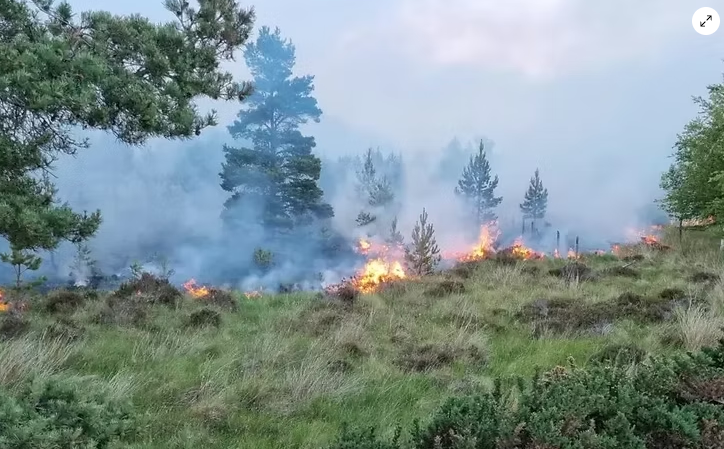
A new University of Leeds paper, picked up by the RSPB to call for grouse moor licensing in England, has put cool winter burning back in the headlines.
The paper, published in Environmental Research Letters, combines satellite burn data with regional air-quality modelling to estimate population exposure to PM2.5 from moorland burning between 2017 and 2022. It concludes that, during the burn season of October 2017 to April 2018, an additional 0.55 million people on average were exposed to daily PM2.5 levels above World Health Organization guidelines. The RSPB has used that finding to call for the Scottish grouse moor licensing model to be extended to England.
The wrong measure
The exposure threshold the paper uses is the WHO 24-hour PM2.5 guideline of 15 micrograms per cubic metre. That figure is an advisory aspiration, not UK law. Britain’s binding PM2.5 standards are framed in annual means and long-run reductions in population exposure. There is no statutory daily limit. The paper measures a wet January plume against a benchmark the UK has chosen not to put into statute, and the RSPB has built a legislative ask on top of that choice.
The headline number in context
The RSPB release leads with the line that moorland burning emits the equivalent of almost a third of road transport’s PM2.5. The paper’s own absolute figure is more measured: 1,300 tonnes a year, or around 1.5 per cent of total British anthropogenic primary PM2.5. The framing works only because primary PM2.5 is itself a small share of road transport’s air-quality footprint. The honest scale of moorland burning’s contribution is sitting in the press release itself: 1.5 per cent.
Read the fuel load
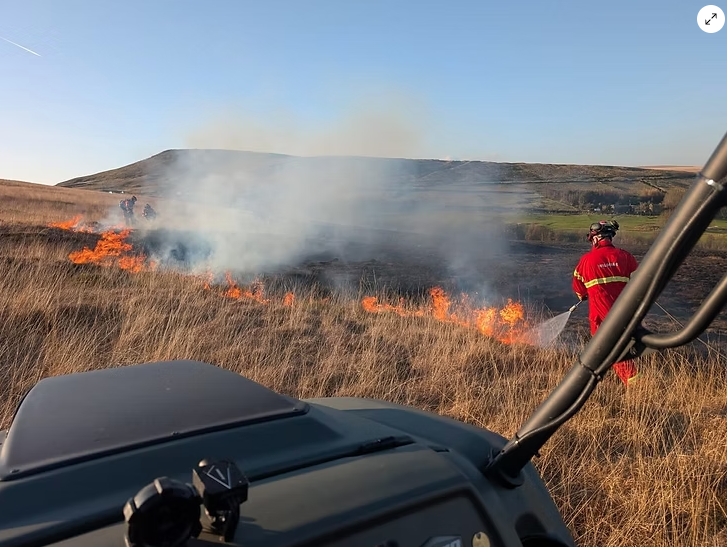
Rank heather is fuel. Peer-reviewed estimates put fuel loads on unmanaged moorland as high as 62.6 tonnes per hectare. Ignited under dry, windy summer conditions, that produces fire intensities above 10,000 kilowatts per metre, beyond the capacity of ground crews to suppress and hot enough to take the deep peat with it. A cool burn in damp winter conditions strips the surface canopy, drops the fuel load to two or three tonnes per hectare, and leaves the peat untouched.
The emissions arithmetic follows. A severe wildfire can release up to 100 tonnes of carbon per hectare once the peat catches. A controlled winter burn releases one to two. The 1,300 tonnes of PM2.5 the Leeds paper attributes to a typical year of cool burning has to be set against the 8,809 tonnes generated by the 2025 wildfire season alone, in a year that saw 47,879 hectares burned and an estimated economic cost of £460 million.
What licensing actually has to weigh
A regulator weighing grouse moor licensing on air-quality grounds has to do three things this release does not. It has to compare prescribed burn emissions against the wildfire emissions they avoid, not against an unmodified counterfactual. It has to benchmark against UK statutory air-quality standards, not advisory guidelines the UK has chosen not to legislate. And it has to engage with the keepers, land managers and fire and rescue services who do the actual work of keeping summer fuel loads in check.
Until that analysis is on the table, the public-health case for restricting cool burns has not been made.