
Snake Pass Wildfire: Gamekeepers Hold the Line on Unmanaged Moorland
A major wildfire that broke out off the Snake Pass in the Peak District on the evening of Thursday 30 April has once again placed neighbouring gamekeepers at the heart of the response. The keepers fought through the night to contain a blaze that has since become the latest in a long line of incidents pointing to a national wildfire crisis.
Derbyshire Fire and Rescue Service was alerted at 8.58pm. By Friday morning, nine fire crews were on site, supported by wildfire units, a rural unimog, two water carriers, a fuel bowser, a welfare unit, a command support unit and a helicopter. Firefighters from Greater Manchester, West Yorkshire and South Yorkshire were drawn into the response alongside Derbyshire crews, while Derby Mountain Rescue Team deployed its drone unit to assist incident command. At its height, the fire was burning across roughly 900,000 square metres of moorland, an area equivalent to almost 9.7 million square feet.
The A57 between Glossop and Ladybower Reservoir was closed in both directions while emergency services worked the incident, and motorists were asked to avoid the area and use alternative routes. A significant smoke plume drifted west across Greater Manchester, with residents in Glossop, Oldham, parts of Stockport, Tameside, Little Hulton, Atherton and as far as Salford reporting the smell of smoke and being advised to keep windows and doors closed. The road has since reopened, the fire is under control, and crews returned to the scene on Saturday morning to ensure full extinguishment.
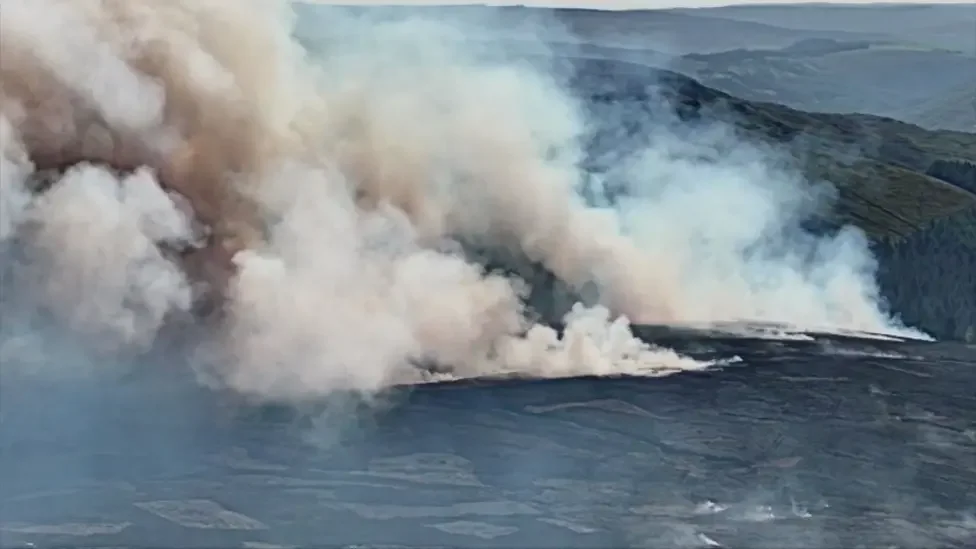
Derby Mountain Rescue Team
The ground on which the fire is burning is owned by the National Trust. According to the Peak District Moorland Group, the gamekeepers who fought the blaze through Thursday night came from neighbouring privately managed moors. Some stayed on site until dawn, whilst others returned at first light to take over.
The pattern is familiar. Wildfires take hold most readily where vegetation has grown rank, where fuel loads are heavy, and where rotational management has not been used to break up dense stands of heather. Privately managed grouse moors are kept in a mosaic of short and tall vegetation through cool burning and cutting. That mosaic creates natural firebreaks and limits the volume of fuel available when a spark catches. Where those tools are absent, the fuel stays in place. When conditions align, the result is what has just unfolded above Glossop.
The contrast played out on the ground overnight. Gamekeepers whose own moors are actively managed crossed onto neighbouring land to fight a fire that has burned hot and moved fast. Without their local knowledge, their equipment, and their willingness to turn out at short notice, the burden on the public fire service would have been heavier still.
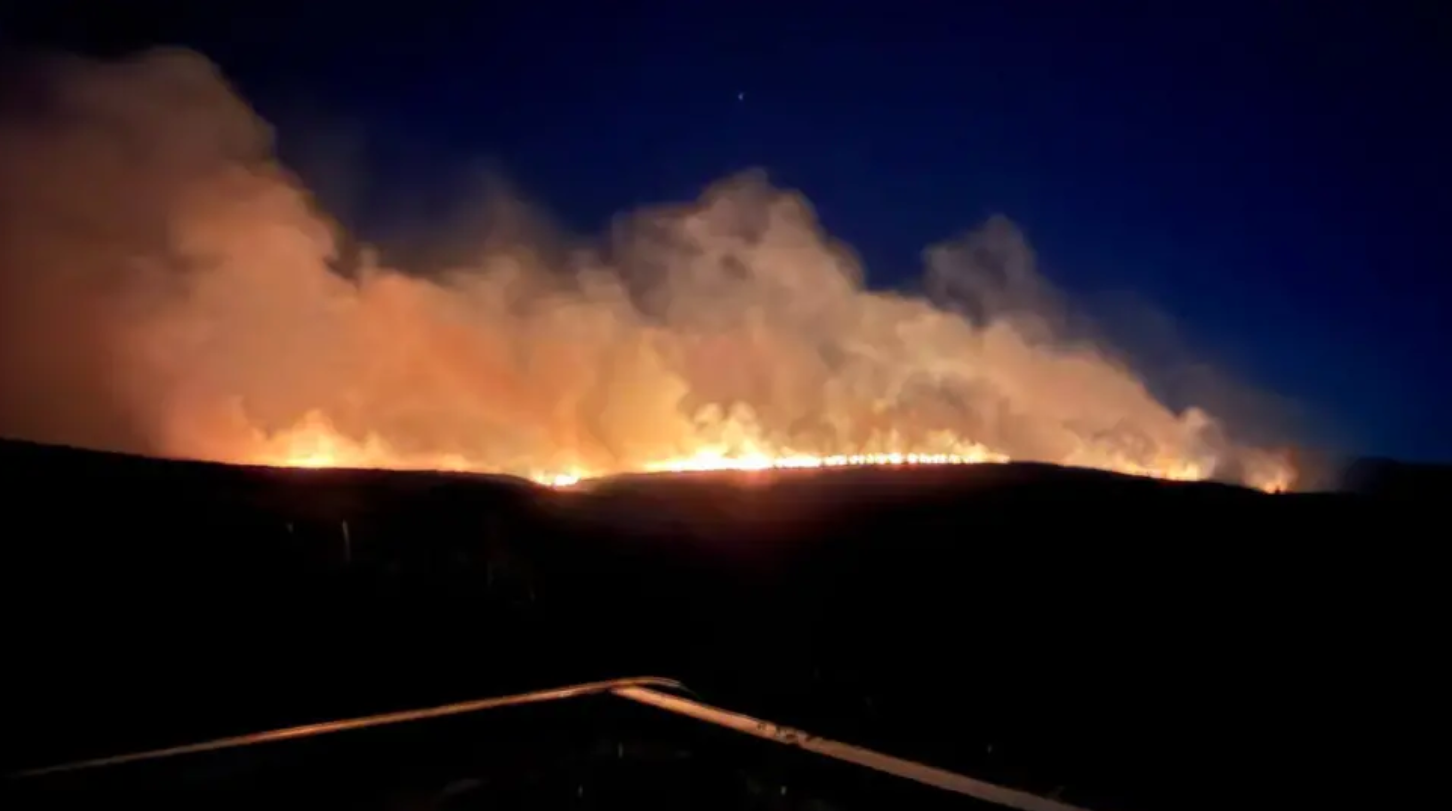
Peak District Moorland Group
The Snake Pass blaze does not stand alone. Grass fires in the Elan Valley in mid Wales have continued for a fifth consecutive day, and forestry has been burning in the Brecon Beacons in South Wales. Two significant wildfires tore through the moorland near Ladybower Reservoir in the space of forty eight hours last month, prompting park authorities to remind visitors not to use disposable barbecues and to take all litter home.
The Met Office has confirmed that conditions for wildfires are now rated as severe across large parts of England, Wales, Northern Ireland and Scotland. April 2026 was drier, warmer and sunnier than average across the United Kingdom, with temperatures touching 25C at Heathrow, Northolt and Kew Gardens on the day the Snake Pass fire took hold. High winds drive faster spread, and prolonged warm and dry weather makes any fire that does start considerably more severe. The National Gamekeepers' Organisation has now moved its wildfire risk index to red for every moorland area in England and Wales.
Visitor behaviour is compounding the risk. The BBC reports that across the Peak District alone, gamekeepers dealt with 36 wild camping and open fire incidents over the previous weekend. With the risk index now at its highest level, any open flame on the moors carries the potential to start an incident on the scale of the one that has just burned above Glossop. Disposable barbecues, camp fires and casual cigarette ends should have no place on dry moorland in conditions like these.
Snake Pass is more than a local landmark. The surrounding moorland supports red grouse, breeding hen harriers, curlew and other ground nesting birds whose habitats are uniquely vulnerable to large, hot, uncontrolled burns.
The Snake Pass blaze is the latest in a long line of incidents that make the case for active moorland management more clearly than any policy paper could. The gamekeepers who fought through Thursday night have once again demonstrated why the case for retaining traditional management tools is not an abstract debate. It is a question of who will be ready when the next fire starts, and on what kind of ground it will land.