
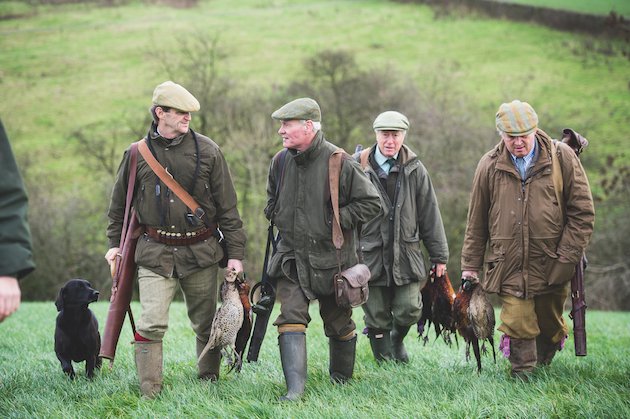
The British Association for Shooting and Conservation (BASC) has won its high court challenge against Natural England over its controversial gamebird-release licencing system. This is welcome news for the pheasant shooting community, and especially for the gamekeepers, farmers and rural communities whose livelihoods depend on the industry. It also acknowledges the considerable efforts undertaken in recent weeks to mitigate the damage caused by wildfires across the country. The ruling from Mr Justice Ritchie found that regulators had acted unlawfully. This is more than a victory for BASC; it is a clear reminder that regulators, like everyone else, must operate within the law.
The judgement was delivered on 16 July, with Mr Justice Ritchie ruling that Natural England has exceeded its statutory powers. As reported by BASC, Natural England had adopted an interpretation of ‘release’ that exceeded the meaning of the legislation ordained by Parliament. The court proceeded to rule that Natural England cannot impose conditions preventing the keeping of gamebirds on site before they are released.
Mr Justice Ritchie labelled the conditions implemented by Natural England as “Irrational”. This is certainly welcome news to gamekeepers as they finally see a decision come their way against the relentless barrage of policies that Natural England impose on them.
The High Court explained their decision as Natural England had misunderstood the scope of its authority, but is this the only case in which Natural England has misunderstood the extent of its powers?
The case concerned pheasants and red-legged partridges released on or near Special Protection Areas (SPA) in England. There are 82 SPAs in England which total to over 970,000 hectares, which portrays the magnitude of this decision and what a crucial victory it is for BASC and the wider shooting community.
Unfortunately, various shoots have already had to close because of this decision but to those that were able to stay afloat this news is a game changer.
BASC initially attempted to resolve the disagreement directly with Natural England, but when their diplomatic approach was shunned, they turned to their main resource – the BASC “Fighting Fund” which is a fund that enables BASC to fight unjust regulations such as this.
Whilst this fund is well supported financially, spending significant sums pursuing a case that ultimately demonstrated Natural England had acted irrationally and unlawfully is not how BASC would want to be using its resources. As a result, BASC is now seeking reimbursement for the costs incurred during this legal challenge.
For gamekeepers and shoot managers, the ruling provides much-needed clarity after two seasons of uncertainty. Their work extends far beyond managing gamebirds, frequently including habitat restoration, predator control and conservation monitoring. BASC estimates that sustainable shooting delivers more than £500 millions of conservation work annually - the equivalent of 26,000 full-time jobs. This ruling should therefore be viewed as supporting responsible countryside management, not weakening environmental protection. Effective regulation must be lawful, practical and shaped by those who understand the land.
The victory also arrives during an exceptionally difficult period for Britain’s gamekeepers. Across the country, many have worked alongside fire and rescue services to tackle destructive wildfires, providing specialist equipment, local knowledge and access to remote moorland. Although the judgment is unrelated to wildfire management, it offers rare positive news for Regional Moorland Groups and the wider rural community who face growing pressures. At a time when gamekeepers are helping protect vulnerable landscapes from fire, the ruling reinforces the importance of respecting their practical knowledge and contribution to the countryside.
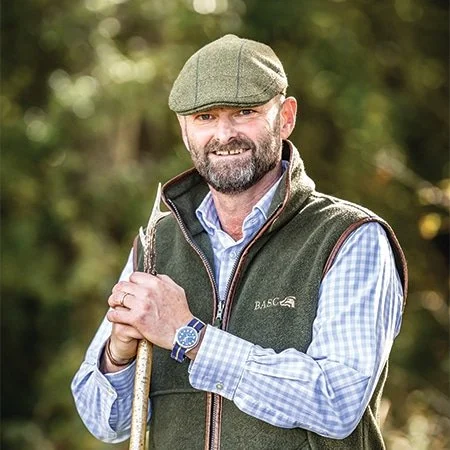
Ian Bell - BASC CEO
Ian Bell, the CEO of BASC, commented “this judgement is not about shooting versus a government regulator. It is about the simple principle that public bodies must act within the law, just as they expect everyone else to”. He further noted that BASC had done everything possible to avoid this, but Natural England’s leadership ignored them.
Furthermore, this case adds to the criticism the regulator has received for its stance on Dartmoor Hill Ponies and its attempt to limit farming operations.
A Natural England spokesperson said, “we are seeking to try to ensure the implications don’t take immediate effect and will also be seeking permission to appeal”. A rather obscure comment to make after a just decision was made by the High Court. It leaves one thought in the mind of rural communities around the country: are Natural England a regulator looking to create fair and constructive regulations or have they got an unjust agenda in which they desire change for no rational reason?