
Robert, the Peak District land manager behind the UK Parliament petition to bring back controlled burning, has been involved with the same moor since 1986. He has fought wildfires on it for even longer. Here he explains, in his own words, what the burning regulations mean on the ground.
Fifty years of wildfires
Robert’s first wildfire was in 1976, the drought year, when he was 13 and out on the moor with his grandfather.
“The moor burned for three weeks in August and September until it finally rained properly,” he said. “The damage was unbelievable. The peat was burning six to eight feet deep in places, and it took 20 years for the vegetation to recover.”
There have been several fires since. In July and August 2024, the moor suffered another major wildfire, a mile long and half a mile across. According to the fire service report, it took 14 days, with 48 personnel on the moor each day plus equipment. It burned several feet into the peat in places.
The most recent was in March 2026. “It was small, and one of my colleagues put it out quickly,” Robert said. “It was started by a walker throwing away a cigarette end.”
A licence that can’t be used
Around 80% of the moor Robert is involved with is classed as deep peat habitat, where no prescribed burning is allowed without a Defra licence, and licences are not easy to obtain. For Robert, the problem goes further.
“Even if we could get a Defra licence, our Natural England management plan doesn’t allow burning on these areas,” he said. “So, the licence is useless to us.”
Cutting is not the answer
With burning ruled out, cutting is the main option left, alongside grazing, where sheep numbers are very restricted by Natural England. Robert says cutting has serious limits.
“Cutting does remove long, rank heather, but it leaves a lot of litter on the ground, and in summer that’s just tinder for a wildfire,” he said. “In the 2024 fire, the cut areas didn’t stop it. It burned straight across them.”
Around 800 acres of the moor cannot be cut at all. “It’s too steep, rough or rocky, or a combination of all three,” Robert said. “But it’s deep peat, so we’re not allowed to burn it either.”
Even a single stone can make cutting impossible. “Last December I hit one small rock hidden in the long vegetation on deep peat and bent the rotor on the flail mower,” he said. “I’d walked the area and it looked fine, but one small hidden rock was enough. It was expensive and time-consuming to repair.”
Cutting is also far more expensive than burning. “We spent £24,000 on cutting last year,” Robert said. “Burning the same area would probably cost about £1,500.
After the 2024 wildfire, Robert met Natural England to review what had happened. He asked what land managers were supposed to do with the areas that cannot be cut.
“I asked, ‘What are we supposed to do with these areas? Just wait until it all goes up in smoke in another summer wildfire?’” he said. “The answer is always that we can’t burn it, and no solutions are offered, even though the meeting was to review a wildfire a mile long and half a mile wide.”
Defra and Natural England say prescribed burning damages peat. Robert disagrees, provided burns are done correctly.
“A proper cool burn doesn’t damage the peat,” he said. “I’ve plenty of pictures of controlled burns where all the moss, including sphagnum, is still green after the flames have just passed over. I’ve sent them to Natural England many times. But even when you show them the serious damage a summer wildfire does to the peat, they won’t change their position.”
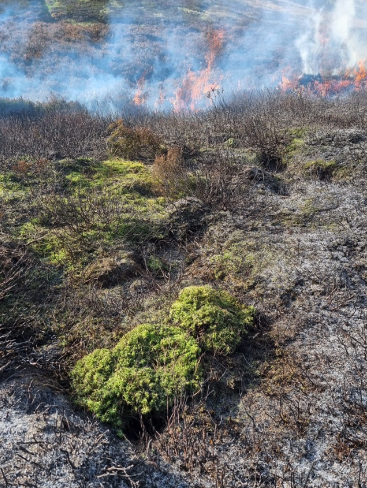
Sphagnum moss still green after a prescribed cool burn on shallow peat, March 2023
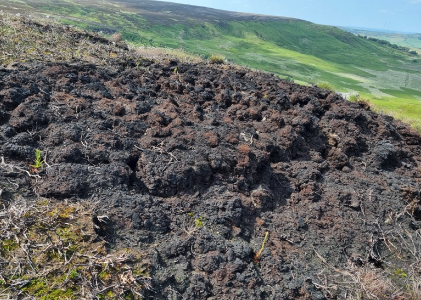
Deep peat burned 12 inches down to a crust by the July–August 2024 wildfire. Photo taken October 2024
“It’s not all about grouse”
Robert is clear that the impact goes well beyond grouse.
“Curlew, golden plover, snipe, dunlin and oystercatchers don’t nest in long vegetation,” he said. “When the heather gets old and tall, these waders lose their nesting ground.”
He has seen the change first-hand. The moor’s best golden plover nesting area is now overgrown with grasses, including Molinia. “Thirty years ago, we used to see flocks of 200 or more golden plover,” he said. “Now we see small groups of 20 at most.”
The rank heather also starves cotton grass of light, so it fails to flower. “Cotton grass flowers in late spring and summer are highly beneficial to many species, including insects and particularly bees,” Robert said. “Where there’s been a prescribed burn, the cotton grass flowers far more, because the potash from the burn acts as a fertiliser. When you cut, nothing is put back.”
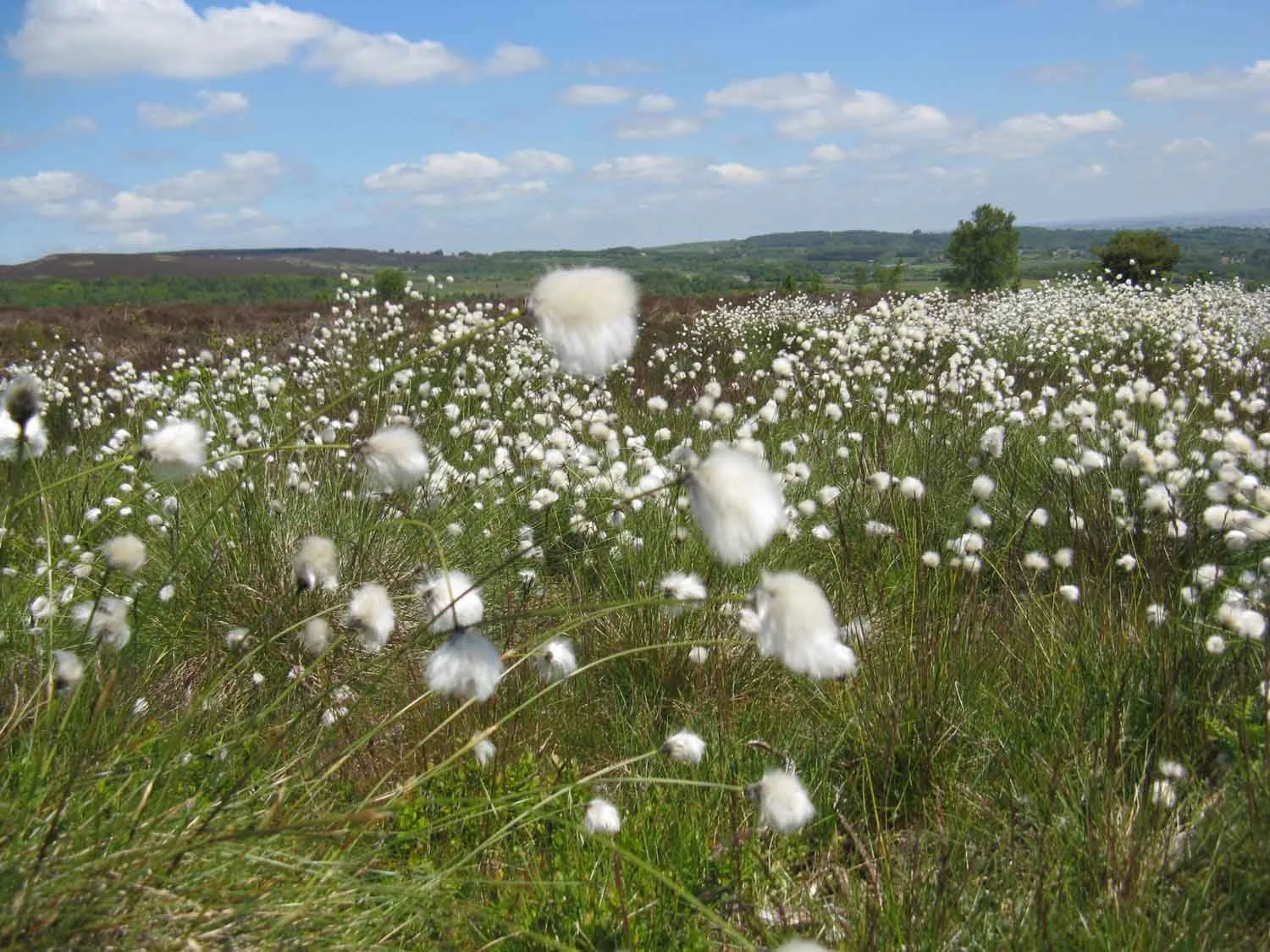
Rewetting is not enough on its own
The moor was extensively rewetted 10 to 12 years ago under Natural England’s capital works scheme. But Robert says that does not remove the risk.
“In dry weather in spring and summer the top surface soon dries out,” he said. “The peat may be wet a few inches down, but the excessive vegetation on the surface is a tinder box. What does stop a wildfire is ground where a prescribed burn has been carried out in the burning season.”
Sign the petition
Robert’s petition calls on the Government to revoke the Heather and Grass etc. Burning (England) Regulations 2021, as amended in 2025, so land managers can use controlled burning to reduce wildfire risk. At 10,000 signatures the Government must respond, and at 100,000 it will be considered for debate in Parliament. The petition closes on 23 April 2027.
Sign the petition: https://petition.parliament.uk/petitions/783877