
Peak District gamekeepers giving up their weekends to clear public litter from moorland are being turned away from council tips, due to rules that treat their vehicles as commercial operators.
Across the Derbyshire moors, gamekeepers and rural workers have been filling pick-ups with rubbish left by visitors on roadsides, footpaths and remote moorland tracks. But because their vehicles are taxed as commercial, they are capped at a set number of trips to local household waste recycling centres each year, and what they collect on public land is classed the same as trade waste.
Richard Bailey, coordinator of the Peak District Moorland Group, said the scale of the problem was growing. "It's sadly inevitable that as more visitors come to these areas, the rubbish increases. It's not just roadsides. Popular paths through woodlands and secluded moorland tracks all have their fair share as well."
Moscar Estate pays £1,300 a year for a commercial waste container - an ongoing cost the estate carries simply to keep disposing of rubbish cleared from National Park land. Without such an arrangement, keepers elsewhere have found themselves refused outright: a gamekeeper in the High Peak area was turned away from Glossop Tip when he arrived with bags of litter collected from public land, on the basis that it counted as commercial waste.
One gamekeeper explained that his vehicle is allowed 12 tip visits a year. After clearing public rubbish from estate surroundings, he has no allowance left for his own household waste and risks a penalty if he exceeds the cap.
A recent litter pick at Bradfield Estate, part of a wider coordinated effort across Peak District moorland estates, filled three pick-up trucks in four hours along a three-mile stretch of moorland road. Another group had already worked part of the same route earlier in the day.
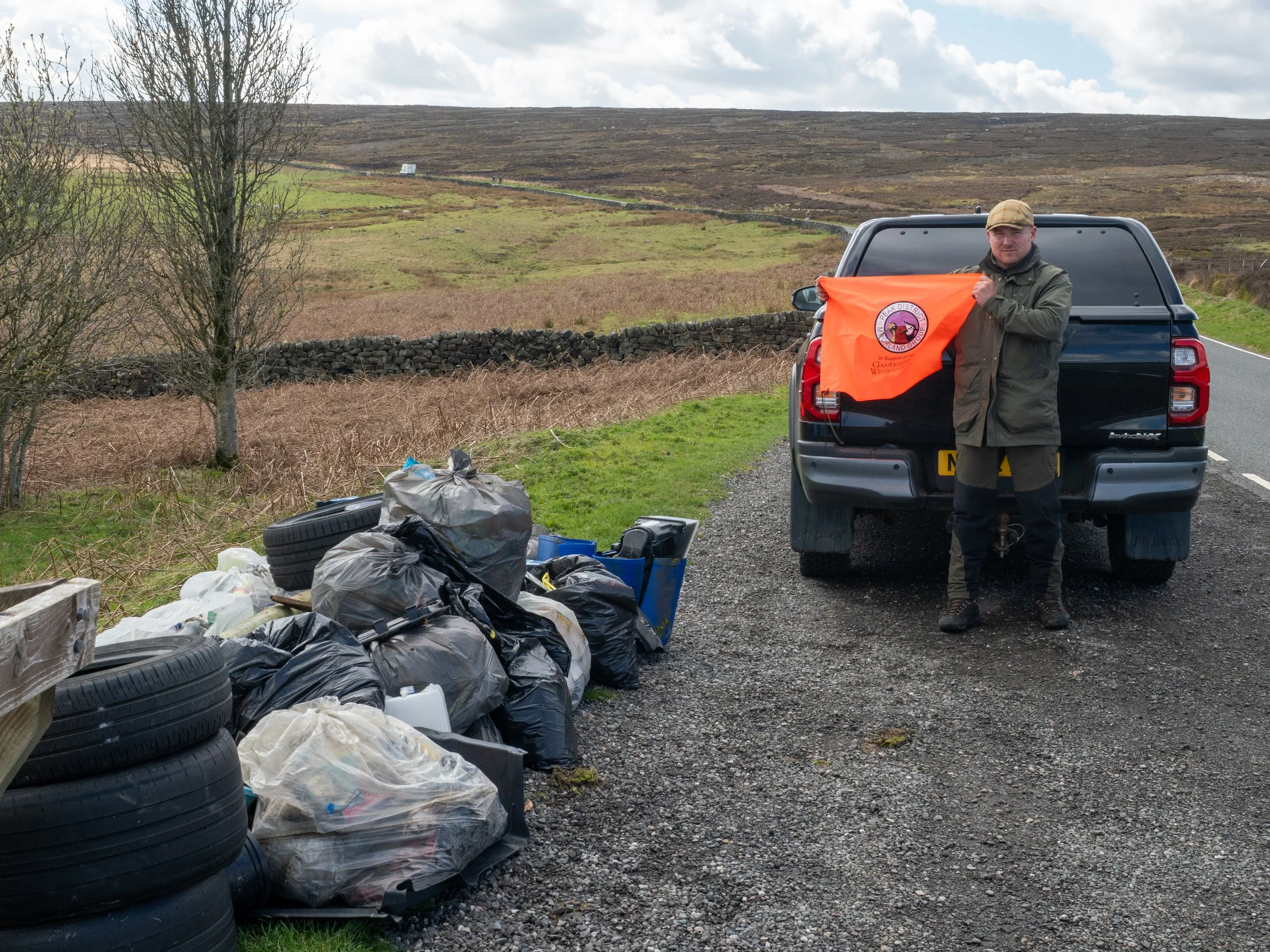
Bradfield Estate litter pick
Gamekeeper Adam Sharratt brought his children with him to clear litter at Derwent Reservoir. Much of what is found, he said, is accidental, blown or dropped from bags. How fast food packaging is a recurring problem, with visitors driving into the Peak District, eating in their cars and throwing wrappers from the window.
Derbyshire County Council's Cabinet Member for Net Zero and Environment, Councillor Carol Wood, said household waste recycling centres were not the right disposal route for litter collected this way. She pointed to existing arrangements for district and borough councils to bring highway litter to council waste transfer stations, and offered to discuss whether those authorities might also accept litter collected by local volunteers from public land. She added that commercial waste and waste from private land remained the responsibility of the waste producer or landowner, with charges applying by law.
A spokesperson for the Peak District Moorland Group welcomed the offer of dialogue with district and borough councils but said it did not address the core problem. "It doesn't seem right for volunteers clearing litter from public land at their own expense to be treated the same as commercial trade waste. People doing unpaid public work shouldn't be caught out by the same restrictions as commercial operators."