
Yorkshire Dales Gamekeepers and Community Team up to Provide New Home Comforts for Sand Martins
When the grade II listed Lords Bridge in the Wensleydale village of West Witton came under threat from erosion, a colony of the smallest and first European summer hirundines to arrive in Yorkshire faced becoming collateral damage from the works.
However, gamekeepers on the Bolton Castle Estate, who have previously been heralded for their conservation work with curlews and Yorkshire's first breeding ospreys in over 200 years, raised the alarm about the jeopardy facing its sand martin colony.
Sand martins dig burrows on riverbanks and cliffs, with the tunnels they bore stretching up to a metre in length and featuring a chamber where they lay their eggs.
Ahead of the Environment Agency undertaking work on the River Ure’s banks, the newly-formed team hand-built a 100-hole replacement nesting wall, complete with a mud covering to imitate the natural bank.
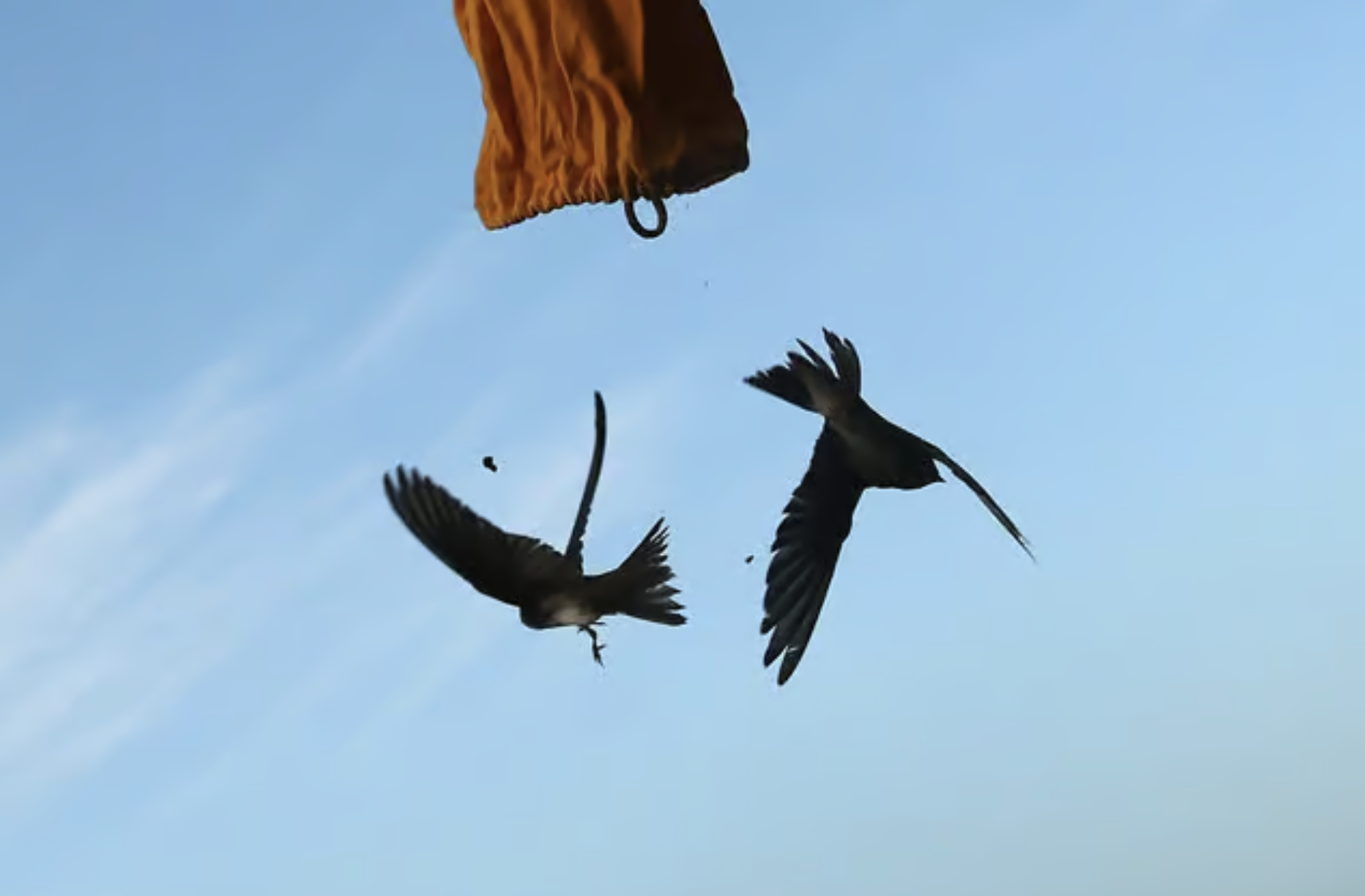
Artificial banks for sand martins have previously been introduced across Yorkshire with some success, such as on the River Don at Carbrook and Kelham Island. Birdwatchers in Nidderdale have reported the artificial wall completed in 2014 at Gouthwaite Reservoir has seen sand martins nesting there every spring since.
The sand martin population visiting Yorkshire in March and leaving in October has fluctuated, but thanks to such schemes to ensure their habitat, they were moved from the Amber to the Green List in a decade ago.
Ian Sleightholm, head gamekeeper, at the 12,000-acre estate, said: “The fact that sand martins travel 4,000km every year back to our estate from Africa, and weighing just 13 to 14 grams, amazes me.
“So when we knew the Environment Agency planned to carry out riverbank work where our historical colony nested, we owed it to this little bird to offer an alternative in the form of a 100-hole sand martin’s hotel."
The wall, completed over three to four weeks, was constructed and finished with a covering of mud designed to mimic the sandy banks the birds excavate in the wild.
Within weeks of completion, the martins had returned and begun nesting, confirming the success of the project.
The build followed works carried out by the Environment Agency further along the river, where the original sand bank colony had to be removed to install a new defensive wall of large rocks and tree root balls.
The project was led by retired gamekeeper Simon Lester, who oversaw the construction alongside the estate's full-time keepering team. Volunteers were drawn from the surrounding village to help mix and apply the mud covering that gives the wall its naturalistic finish.
Simon Lester said: "Sand martins, like many other creatures, need as much help as they can get.
"When the bank which houses the sand martin colony at Lords Bridge was refurbished to stop erosion, I was very concerned that the birds would fly all the way back from Africa to find their homes gone.
"We had the idea to make a wall, we built it, and they are using it, which is great. We won't know how successful it has been until we take the back off after they have embarked on their migration. The other good news is that they have started a small new colony on the opposite bank."
Sand martins can be identified by their dark brown upper parts and dark under wings, contrasting with pale under parts divided by a distinctive dark chest stripe.
Over the past 50 years the European population has crashed twice as a result of drought in the birds' African wintering grounds, making local conservation projects of this kind increasingly important.
The Bolton Estate has long combined working land management with practical wildlife conservation, and the sand martin wall now forms part of a wider programme of habitat protection across the estate.
The estate has already received unsolicited messages of thanks from members of the public who have spotted the new wall while walking beside the river.
The impact has extended beyond the build itself. A regular walker on the river Ure, who has looked for the martins each spring for several years, wrote to the estate after spotting the new wall: "I cannot tell you how elated I am, it made my heart sing.Thank you so much for caring for our wildlife, it's all very precious."
Mr Sleightholm said: "It has been so rewarding to watch these fast-flying birds darting in and out of it, and the positive feedback from the general public has been really heartening.”
This article originally appeared on the The Yorkshire Post.