
From Summer Wildfires to Autumn Action: Caring for Our Moors
The 1st of October marked the commencement of burning season for England’s uplands, following a summer of intense wildfires. As the rain finally returns and the air cools into autumn, it is time for land managers to begin preparing for the year to follow. The challenge for communities, emergency services and those who work on the moors is how to prepare these landscapes for future fires, while also protecting the habitats and wildlife that make them valuable.
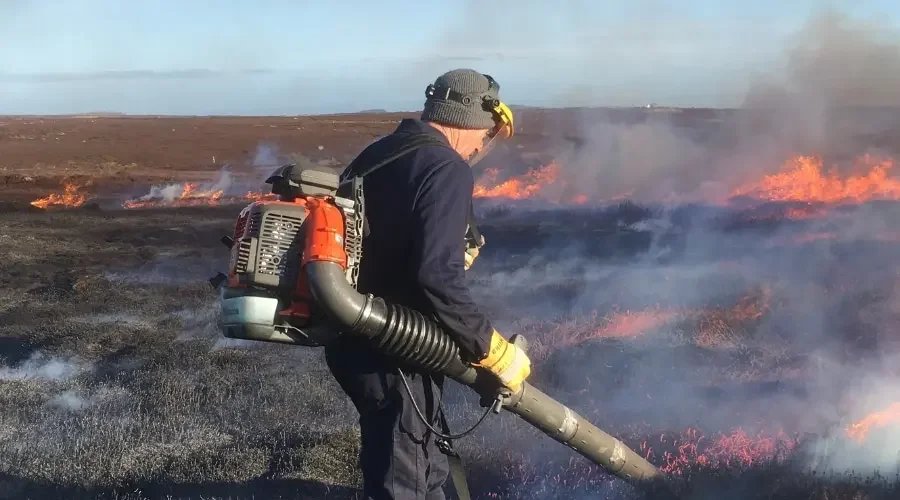
Meeting that challenge requires practical management, informed by local experience and sound evidence. This summer demonstrated the contribution of people who know the uplands intimately. We previously shared a letter of thanks from Greater Manchester Fire and Rescue Service’s Chief Fire Officer, Dave Russel, recognising support from the Peak District Moorland Group and individual gamekeepers. Its account describes gamekeepers, farmers and landowners bringing equipment and knowledge of the terrain to support fire crews during prolonged incidents, including Swineshaw and Dovestone.
Recent data shows that 28,299 hectares of land has been burned by wildfires in the UK in 2026 up to 1 September. Biodiversity impacts, though not yet quantified, were significant for ground nesting birds, invertebrates, and small mammals and reptiles. Damages to blanket bog and heathland supporting golden plover and merlin during the 2026 Peak District fire are a particular example of this.
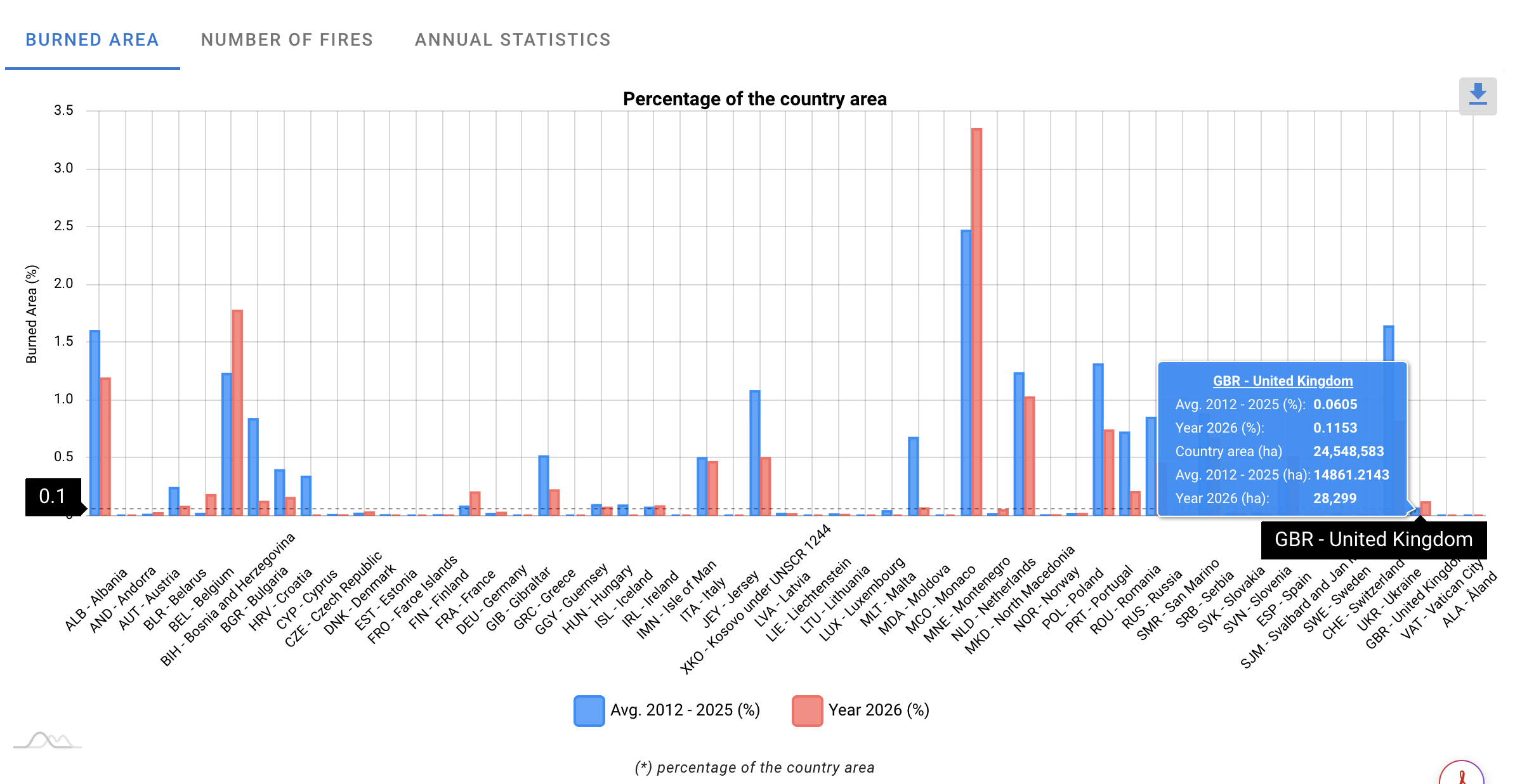
Figure: GWIS Estimates for Europe
On suitable dry heather heath, carefully planned, small-scale controlled burns can create patches of vegetation of different ages and heights. This can provide young growth for feeding alongside older vegetation for nesting and shelter. Where burning is used, retaining mature patches and unburned refuges is important. England’s management code supports maintaining this structural diversity where burning is justified, but some feel it is too restrictive, and that limiting burning may increase retention of fuels going into next summer. Autumn and winter also provide an important opportunity to improve moorland resilience through appropriate vegetation management and, on degraded peatland, measures to restore water levels and retain seasonal rainfall.
The Moorland Association has called for an independent review of upland fuel accumulation. Such scrutiny could help identify where interventions are needed and which combinations deliver the greatest benefit. As the new season begins, England needs to support the people doing this work, and must assess results carefully. Appropriate prescribed burning, targeted vegetation management and peatland restoration should each be judged by their contribution to safer communities, resilient habitats and healthier wildlife populations.